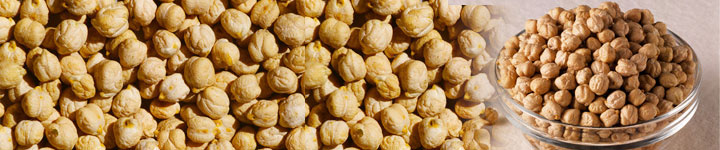
The chickpeas is an edible legume (English "pulse") of the family Fabaceae, subfamily Faboideae. The garbanzo is often used as a source of protein by vegetarians and vegans since it has one of the highest protein levels of all plants.
There are two main kinds of chickpeas
- white chick peas
- green chick peas
The plant grows to between 20 and 50 cm high and has small feathery leaves on either side of the stem. One seedpod contains two or three peas. The flowers are white or sometimes reddish-blue. Chickpeas need a subtropical or tropical climate with more than 400 mm of annual rain. They can be grown in a temperate climate but yields will be much lower.
Mature chickpeas can be cooked and eaten cold in salads, cooked in stews, ground into a flour called gram flour (also known as besan and used in primarily in Indian cuisine), ground and shaped in balls and fried as falafel, fermented to make an alcoholic drink similar to sake, stirred into a batter and baked to make farinata, cooked and ground into a paste called hummus or roasted, spiced and eaten as a snack (such as leblebi).

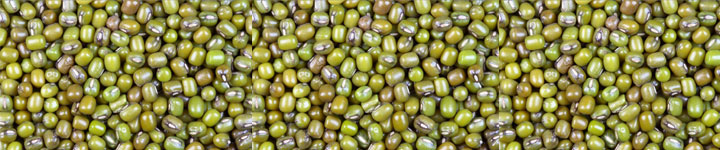
Mung bean, also known as mung, moong, mash bean, munggo or monggo, green gram, golden gram, and green soy, is the seed of Vigna radiata which is native to India. The split bean is known as moong dal, which is green with the husk, and yellow when dehusked. The beans are small, ovoid in shape, and green in color. The English word "mung" derives from the Hindi moong.
Mung beans are generally eaten either whole (with or without skins) or as bean sprouts, or used to make the dessert "green bean soup". The starch of mung beans is also separated from the ground beans to make jellies and noodles.
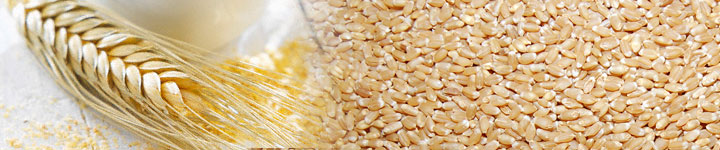
Wheat is a domesticated grass from the Levant that is cultivated worldwide. Globally, wheat is an important human food, its production being second only to maize among the cereal crops; rice ranks third. Wheat grain is a staple food used to make flour for leavened, flat and steamed breads; cookies, cakes, pasta, noodles and couscous; and for fermentation to make beer, alcohol, vodka or biofuel.Wheat is planted to a limited extent as a forage crop for livestock, and the straw can be used as fodder for livestock or as a construction material for roofing thatch.
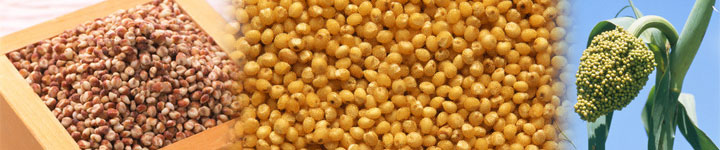
Bajra (millet ) and jowar - are referred to as small millet and big millet. They are both widely used in Maharastra, Gujarat, Madhyapradesh of India, mainly for making roti. Bajra protein is relatively richer in lysine, methionine and tryptophan than other grains. Bajra contains 5 - 6 % fat which is of some significance in low fat diets as 400 - 500 gms of bajra would provide 20 - 30 gms of fat and 10 - 15 gms of linolenic acid. Bajra is a reasonably good source of thiamin (Vitamin B1). It is also a better source of iron than other grains. Jowar is deficient in lysine and has an excess of leucine.
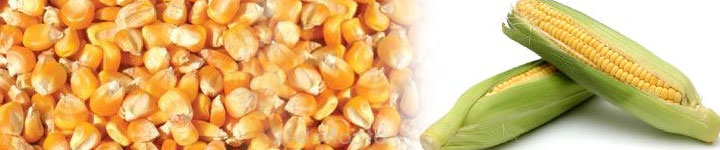
In India, yellow maize is emerging as third most important crop after rice and wheat. Maize has its significance as a source of a large number of industrial products besides its uses as human food and animal feed. Diversified uses of maize for maize corn, starch industry, corn oil production, baby corns, popcorns, etc., and potential for exports has added to the demand of maize all over world.
In India the maize potential districts are Andhra Pradesh, Bihar, Gujarat, Karnataka, Madhya Pradesh, Orissa, Punjab, Rajasthan and Tamil Nadu.